
Beginner guide 6 min read by the Surf Holiday Bali coaches
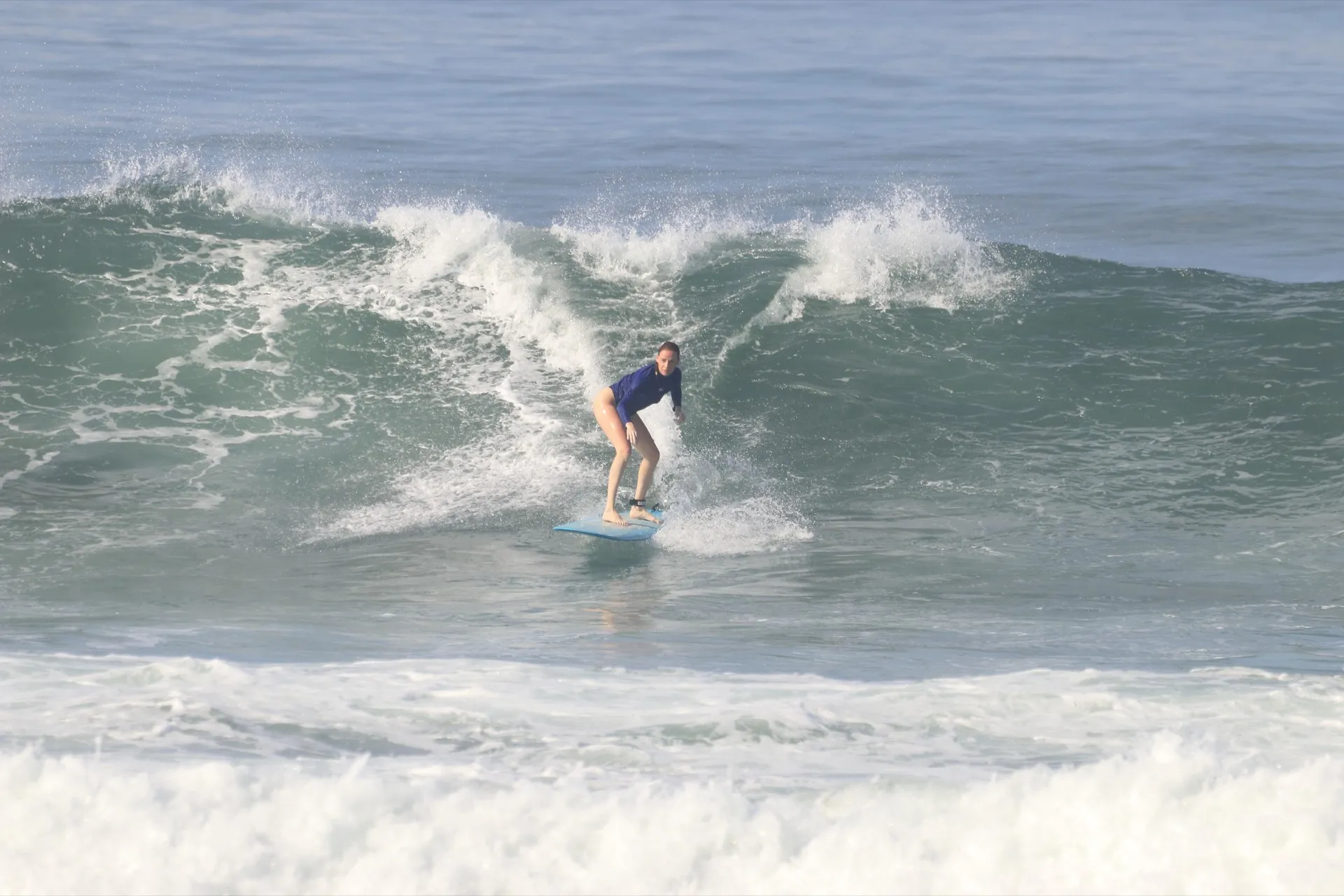
Here’s the honest answer up front: you can learn to surf in Bali every month of the year. The island sits close to the equator, the water never drops below “pleasantly warm”, and beginner-friendly beach breaks like Batu Bolong work in both seasons. What changes is not whether you can learn — it’s how easy and how fun your first sessions will be. Three things decide that: the season, the time of day, and the tide.
The two seasons, in plain terms
Bali has a dry season (roughly April to October) and a wet season (roughly November to March). For a beginner, the practical differences are smaller than the internet makes them sound.
- Dry season brings steadier offshore mornings on the west coast, clean conditions, and very reliable surf days. It’s also peak travel season, so beaches and line-ups are busier.
- Wet season means occasional rain (usually short, warm bursts in the afternoon), slightly less predictable wind — and far fewer people. Mornings are often still excellent, and as a beginner you’re riding white water close to shore, where a little texture on the surface barely matters.
Our take after years of teaching: if your trip is already booked, don’t change it for the surf. Beginners catch their first waves year-round here. If you’re choosing dates purely for surfing, May, June, and September hit the sweet spot — dry-season consistency without the densest crowds.
Time of day matters more than month
Whatever the season, the daily rhythm is similar: early mornings are the cleanest. The wind is light or gently offshore, the surface is smooth, and the heat is kind. Through midday the wind tends to pick up and chop the surface; late afternoons often calm down again and add a golden-hour glow.
For learning specifically, smooth isn’t everything — wave size and gentleness matter more. That’s why we run intermediate sessions in the cleaner morning windows and steer most first-timers to friendly midday and afternoon tides, when the white water at our beach is at its softest and most forgiving.
The tide — the part most visitors miss
The same beach can be a perfect classroom at one tide and unrideable at another. At low tide some breaks get too shallow; at high tide the waves may barely break before the sand. The friendly window in between shifts by about 50 minutes each day, which is why a fixed “lessons at 9am daily” timetable makes no sense — and why we don’t use one.
When you book with us, we check the tide chart and confirm your exact session time a day ahead. You don’t need to understand tides to learn to surf — you just need an instructor who does.
So when should you book?
- Any month works. Genuinely. Wet season is underrated for beginners.
- Give yourself 2–3 possible days rather than one fixed slot, and we’ll pick the best tide window.
- Plan your lesson early in the trip — most people are hooked after one session and want a second.
Ready to put a date on it? See our lesson packages or message us on WhatsApp with your travel dates and we’ll tell you exactly which window we’d pick.
Visiting soon?
Send us your dates and we'll match you to the friendliest tide of your trip.
Book a lesson